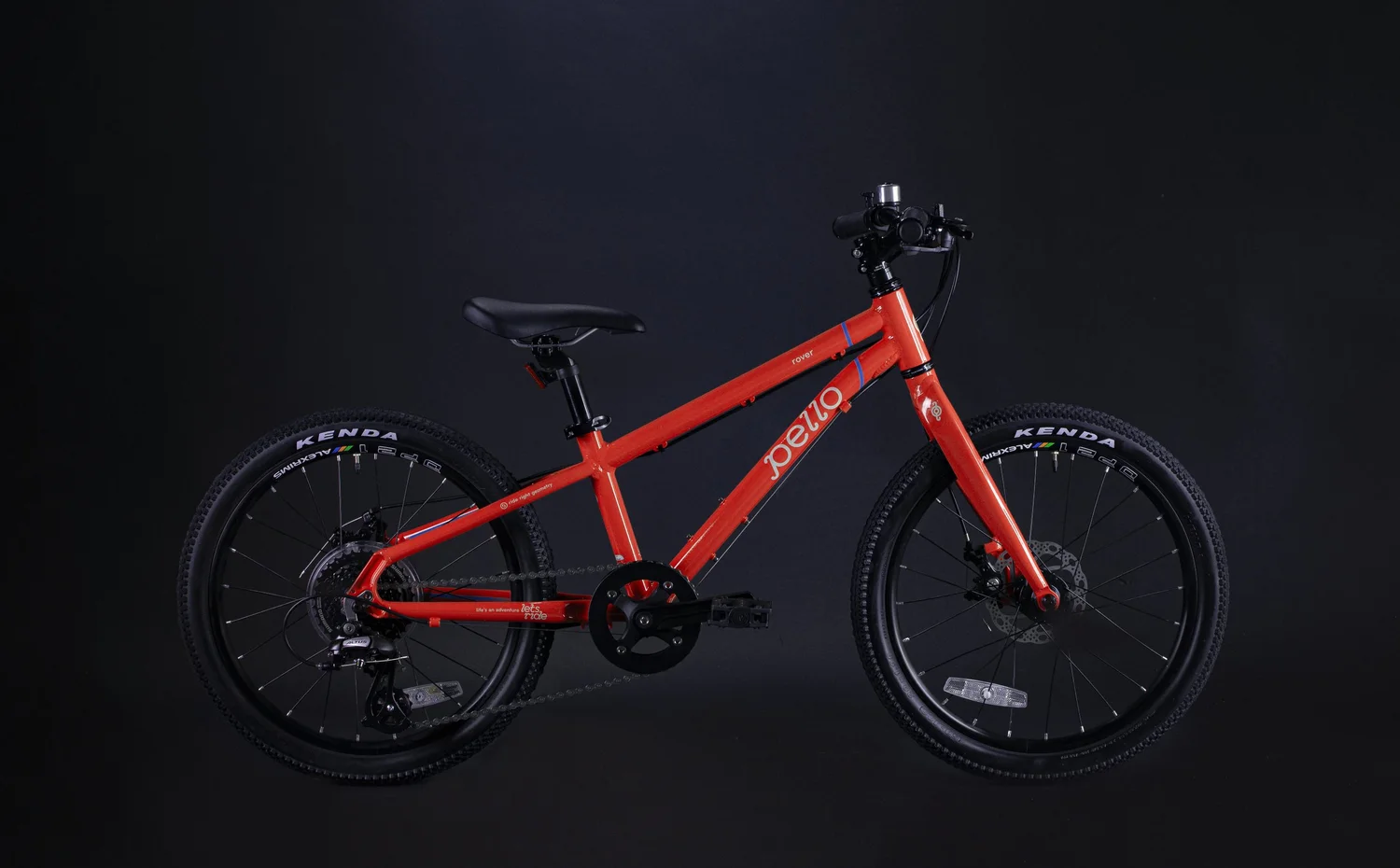
Finding a kids' bike for a six or eight year old is genuinely harder than it should be. Too many of them are either built like scaled-down enduro rigs that cost more than my first car, or they're light pavement bikes that start chattering the moment you hit gravel. I spent longer than I'd like to admit reading comparison threads before landing on the Rover, and after a few months of actual use, I think I made the right call.
The thing that struck me first when we got it out of the box was that it looks like a real bike. Not in a "marketing copy" way — I mean my kid looked at it and said "it looks fast" before they'd even touched it. The orange is genuinely good. They called it "blazing fast color," which I'm fairly certain is now the official name in our house.
Setup was straightforward. One grip shifter, one set of brakes, nothing to overcomplicate the first few rides. I appreciated that more than I expected to, because the last bike we had came with three different adjustment points that my kid somehow managed to mess with constantly.
We've put it through a reasonable mix of surfaces — neighborhood loops, the gravel path by the park where our dog treats every other meter as a potential sniffing emergency, and some light dirt trails that my kid insists on calling "the mountain." On pavement it rolls cleanly, better than I expected for something with tread designed to handle more than asphalt. On gravel it actually grips rather than skipping around, which was the thing I was most uncertain about before buying. The longer wheelbase makes it feel planted on uneven ground — I noticed my kid wasn't doing that stiff-armed death grip they used to do on rougher surfaces. They were actually relaxed, which is how you know a bike fits.
The disc brakes are worth mentioning specifically because I was skeptical about mechanical over hydraulic at this price point. They're not hydraulic-sharp, but they're consistent and they don't grab unexpectedly, which matters more for a kid still calibrating how much hand pressure equals "slow down" versus "face over handlebars." My kid figured out the modulation within a few rides. The grip shift for gears took about a day to click. Now they change gears on hills without thinking about it, which is exactly what you want.
At 20.3 pounds it's not the lightest option out there. The woom 4 is noticeably lighter if you pick both up back to back. But the woom is a pavement bike, and the Rover isn't, so you're not really comparing the same thing. If your kid rides exclusively on smooth surfaces, the weight difference matters more. If they're going to be on mixed terrain, the Rover's build makes more sense and the extra weight is just part of that.
The seven-speed gearing is great for hills and varied terrain. On long flat straights where a kid just wants to go as fast as their legs will allow, they'll eventually hit the ceiling. That hasn't bothered us yet, but if you've got a speed-obsessed kid who only rides flat paths, it's worth knowing.
The seat height range — 22.5 to 27.5 inches — means this isn't getting outgrown by Christmas. That matters at this price. We're at $589, which is real money for a kids' bike, and the honest answer to "is it worth it" depends entirely on how much use it gets and how long it lasts. Based on how it's held up so far and how often it gets ridden, I'm not worried about either.
The moment I felt best about the whole purchase was watching my kid roll over a small dirt mound on one of our trail rides — the kind of thing that used to cause a very specific panicked expression — and just keep going, completely unbothered. That's what a bike that fits and handles well actually does. It gets out of the way and lets them ride.
If your kid lives on tarmac, look at the woom. If they're ready for actual trail riding, the Prevelo Zulu exists. But if you want one bike that handles the school run, the weekend gravel path, and the occasional dirt detour without you having to decide in advance which kind of rider your kid is — the Rover is the one I'd buy again.
Comments
Post a Comment