
Introduction
Walk into any toy store or scroll the board games section on Amazon and the options are overwhelming. There are hundreds of games claiming to be "educational," "fun for the whole family," or "perfect for ages 3 and up" — and most of those claims need unpacking before you actually hand something to a child and expect it to hold their attention past the first five minutes.
This guide covers 52 board games across every major category: age-appropriate picks for toddlers through tweens, cooperative games where everyone wins together, games designed specifically for learning, family games that adults genuinely enjoy too, travel-friendly options for long car rides, and party games that work for groups. Every game here gets honest notes on who it actually suits, what the experience is really like, and when you should skip it despite the hype.
Affiliate disclosure: We earn from qualifying purchases as an Amazon Associate. Links on this page may earn us a small commission — at no extra cost to you. Our recommendations are independent; only games we'd genuinely consider buying for our own kids make the cut.
Quick Picks by Age
Find the Right Game Fast
Top Picks for Ages 3–5
Top Picks for Ages 6–8
Top Picks for Ages 9–12
What You Need to Know First
The Game Types in This Guide, Explained
Strategy Games
Games where your decisions drive the outcome — route-building, resource management, tile placement. Ticket to Ride, CATAN, Azul. Best for kids who enjoy thinking ahead and enjoy a genuine challenge.
Cooperative Games
Everyone wins or loses together. No one gets eliminated, no one feels targeted. Outfoxed!, Hanabi, Zombie Kidz Evolution, Exit. Ideal for younger kids, mixed-age groups, or families that hate conflict.
Party & Card Games
Fast, chaotic, low-stakes fun. Taco Cat Goat Cheese Pizza, Dixit, Decrypto, Exploding Kittens. These need minimal setup, work across wide age ranges, and are the go-to for groups and game nights.
Dexterity Games
Physical skill over mental strategy — steady hands, quick reactions, careful balancing. Animal Upon Animal, Rhino Hero, Yeti in My Spaghetti. Age levels the playing field; young kids beat adults regularly.
Deduction & Mystery
Clue-gathering, elimination, hidden information. Outfoxed!, Clue Harry Potter, Suspects, Hanabi, Trio. Builds logical thinking and works surprisingly well for kids once they grasp the "you know what others don't" concept.
Word & Memory
Language, recall, and vocabulary through play. Bananagrams, Dixit, Q-Less, Memory Super Mario. Often school-friendly and the easiest category to justify at homework time without it feeling like homework.
How to Read Age Labels on Board Games
Buying Advice
How to Choose the Right Board Game for Your Child
Match the Game to Your Child's Patience, Not Just Their Age
Age labels are a reasonable starting point but they don't account for your child's specific tolerance for rules explanation, losing, or sitting still. A 9-year-old who has never played a board game before will struggle with CATAN regardless of what the box says. A confident 7-year-old who plays regularly will sail through Ticket to Ride with no issues. The most important question to answer first: how many rules can this child absorb in one sitting before tuning out?
Cooperative Games Are Underrated for Mixed-Age Groups
When you have siblings or cousins ranging from age 5 to age 13 around the same table, competitive games almost always end in tears from someone. Cooperative games sidestep this entirely. Outfoxed!, My First Castle Panic, Zombie Kidz Evolution, and Hanabi all scale across a wide age range precisely because everyone is working toward the same goal. If mixed ages are your situation, lead with cooperative before anything else.
The Luck vs Strategy Balance Matters More Than Parents Realise
Pure luck games (Candy Land, Cootie) keep young children engaged because outcomes feel fair regardless of skill. Pure strategy games (Hive, Azul, Stratego) reward deliberate thinking but can demoralize a child who loses consistently to a more experienced player. The best family games sit in the middle: some luck to keep outcomes uncertain, some strategy to reward better play. Ticket to Ride, Carcassonne, and King of Tokyo all hit this balance well.
Think About Setup Time, Not Just Play Time
A game that takes 20 minutes to set up will never get played on a school night. Games with near-instant setup (Spot It!, Taco Cat, Taco vs Burrito, Sleeping Queens) get played ten times more often than games that require sorting components, reading rules, and arranging boards. For younger kids especially, the game that hits the table most is the one with the shortest path from box to play.
Travel Games Deserve Their Own Category in Your Collection
A full-size board game works for home but is useless in a restaurant, car, or hotel room. Building a small separate collection of genuinely pocket-portable games (Spot It! tin, Taco Cat, Connect 4, Memory Super Mario, Hive's zip pouch) transforms how often the family plays. The games that get played most in most families are not the impressive shelf pieces — they are the ones that fit in a jacket pocket.
The Mistake Most Parents Make: Buying for the Child They Imagine, Not the Child They Have
The most common board game buying mistake is purchasing a game based on what a child should enjoy at their age rather than what they actually engage with right now. A CATAN box at a 10-year-old's birthday party looks impressive. If that child has never finished a 30-minute game before, it will sit unplayed. Buy one tier below where you think your child is, get them hooked on playing games as a habit, then step up. A child who loves Carcassonne and plays it weekly will be ready for CATAN in six months. A child who gets CATAN cold as their first real strategy game may never touch it.
Find Your Match
Which Kind of Board Game Kid Do You Have?
Side-by-Side Comparison
All 52 Games at a Glance
| Game | Price | Age | Players | Time | Type | Coop? | Travel |
|---|---|---|---|---|---|---|---|
| Candy Land | $12.99 | 3+ | 2–4 | ~15 min | Classic Race | No | Moderate |
| Memory Super Mario | $24.40 | 3+ | 1–6 | ~15 min | Memory/Matching | No | Excellent |
| Sequence for Kids | $12.84 | 3+ | 2–4 | 10–20 min | Pattern Matching | No | Yes |
| Eye Found It! | $9.99 | 3+ | 2–6 | 5–15 min | Search & Find | Semi-Coop | Excellent |
| HABA Animal Upon Animal | $26.99 | 4+ | 2–4 | Quick | Dexterity | No | Yes |
| My First Castle Panic | $24.95 | 4+ | 1–4 | ~20 min | Cooperative | Yes | Yes |
| My First Carcassonne | $42.58 | 4+ | 2–4 | 15–30 min | Tile Placement | No | Yes |
| Yeti in My Spaghetti | $12.00 | 4+ | 2–6 | 5–10 min | Dexterity | No | Yes |
| HABA Rhino Hero | $14.99 | 5+ | 2–5 | 10–15 min | Dexterity | No | Very Portable |
| Dragomino | $19.99 | 5+ | 2–4 | ~20 min | Tile Placement | No | Yes |
| Outfoxed! | $22.08 | 4–15 | 2–4 | 15–20 min | Coop Deduction | Yes | Yes |
| Game | Price | Age | Players | Time | Type | Coop? | Travel |
|---|---|---|---|---|---|---|---|
| Spot It! Classic | $6.79 | 6+ | 2–8 | ~10 min | Visual Speed | No | Excellent |
| Connect 4 | $8.89 | 6+ | 2 | 5–15 min | Abstract Strategy | No | Yes |
| Taco vs Burrito | $19.99 | 6+ | 2–4 | ~15 min | Strategy Card | No | Excellent |
| Taco Cat Goat Cheese Pizza | $9.95 | 8+ (fans 6+) | 2–8 | 10–15 min | Reflex Party | No | Excellent |
| Sleeping Queens | $11.99 | 8+ (fans 4+) | 2–5 | 15–20 min | Card / Math | No | Yes |
| Exploding Kittens | $24.97 | 7+ | 2–6 | Quick | Party Card | No | Moderate |
| Double Bananagrams | $24.99 | 7+ | 1–16 | 10–30 min | Word / Anagram | No | Excellent |
| Zombie Kidz Evolution | $24.99 | 7+ | 2–4 | 5–15 min | Coop Legacy | Yes | No |
| Carcassonne Classic | $30.39 | 7+ | 2–5 | 30–45 min | Tile Placement | No | Moderate |
| Dixit | $39.80 | 8+ | 3–6 | ~30 min | Storytelling | No | No |
| Hues and Cues | $23.34 | 8+ | 3–10 | 30–60 min | Party / Color | No | No |
| Clue: Harry Potter | $38.49 | 8+ | 3–5 | ~30 min | Mystery | No | Moderate |
| 7 Wonders Architects | $43.49 | 8+ | 2–7 | ~25 min | Card Drafting | No | Moderate |
| King of Tokyo | $42.99 | 8+ | 2–6 | ~30 min | Dice Combat | No | Moderate |
| Trio | $14.99 | 8+ | 3–6 | 10–15 min | Memory/Deduction | No | Excellent |
| Hanabi | $14.24 | 8+ | 2–5 | ~30 min | Coop Deduction | Yes | Excellent |
| Stratego | $27.10 | 8+ | 2 | ~45 min | Hidden Info | No | Moderate |
| Jumanji | $18.99 | 8+ | 2–4 | ~30 min | Adventure Race | No | Moderate |
| Game | Price | Age | Players | Time | Type | Difficulty |
|---|---|---|---|---|---|---|
| Lost Cities | $19.95 | 10+ | 2 | 25–30 min | 2-Player Card | Easy |
| Ticket to Ride | $39.99 | 8+ | 2–5 | 30–60 min | Route Building | Easy–Medium |
| Azul | $34.39 | 8+ | 2–4 | 30–45 min | Abstract Tile | Easy/Deep |
| CATAN | $39.99 | 10+ | 3–4 | 60–90 min | Trading/Resource | Medium |
| Carcassonne | $30.39 | 7+ | 2–5 | 30–45 min | Tile Placement | Light |
| Carcassonne Big Box | $71.99 | 7+ | 2–6 | ~30 min | Tile + Expansions | Easy–Varies |
| Hive | $44.30 | 8+ | 2 | 10–30 min | Abstract Strategy | Deep |
| Stone Age | $47.88 | 10+ | 2–4 | 60–90 min | Worker Placement | Medium |
| Verdant | $39.99 | 10+ | 1–5 | 30–45 min | Spatial Puzzle | Light–Medium |
| Harmonies | $30.39 | 10+ | 1–4 | ~30 min | Tile Placement | Easy/Tactical |
| Suspects: Adele & Neville | $35.99 | 10+ | 1–6 | ~60 min | Detective/Mystery | Medium |
| Three Sisters Harvest Ed. | $40.95 | 12+ | 1–4 | 30–60 min | Roll-and-Write | Moderate |
| Exit: The Secret Lab | $17.62 | 12+ | 1–4 | 45–90 min | Escape Room | Hard (3.5/5) |
| Decrypto | $24.99 | 12+ | 3–8 | ~45 min | Team Word | Medium |
| Game | Price | Age | Players | Time | Theme / Type | Difficulty |
|---|---|---|---|---|---|---|
| Eye Found It! | $9.99 | 3+ | 2–6 | 5–15 min | Disney Search & Find | Very Easy |
| My First Castle Panic | $24.95 | 4+ | 1–4 | ~20 min | Castle Defense | Very Easy |
| Outfoxed! | $22.08 | 4+ | 2–4 | 15–20 min | Fox Whodunit | Easy |
| Zombie Kidz Evolution | $24.99 | 7+ | 2–4 | 5–15 min | Legacy Campaign | Easy–Growing |
| Hanabi | $14.24 | 8+ | 2–5 | ~30 min | Fireworks Deduction | Medium |
| Suspects: Adele & Neville | $35.99 | 10+ | 1–6 | ~60 min | Detective Narrative | Medium |
| Exit: The Secret Lab | $17.62 | 12+ | 1–4 | 45–90 min | Escape Room Puzzles | Hard |
| Game | Price | Age | Players | Time | Type | Best With |
|---|---|---|---|---|---|---|
| Spot It! | $6.79 | 6+ | 2–8 | ~10 min | Visual Speed | Any group |
| Taco Cat Goat Cheese Pizza | $9.95 | 8+ | 2–8 | 10–15 min | Reflex Card | Family & parties |
| Taco vs Burrito | $19.99 | 6+ | 2–4 | ~15 min | Strategy Party Card | Smaller groups |
| Exploding Kittens | $24.97 | 7+ | 2–6 | Quick | Chaos Card Game | Older kids + adults |
| Hues and Cues | $23.34 | 8+ | 3–10 | 30–60 min | Color Guessing | Large groups 5+ |
| Dixit | $39.80 | 8+ | 3–6 | ~30 min | Storytelling | Creative kids |
| Trio | $14.99 | 8+ | 3–6 | 10–15 min | Memory/Deduction | Mixed ages |
| Decrypto | $24.99 | 12+ | 3–8 | ~45 min | Team Word/Code | Older kids + adults |
| Game | Price | Age | Players | Time | Size / Format | Portability Rating |
|---|---|---|---|---|---|---|
| Spot It! | $6.79 | 6+ | 2–8 | ~10 min | Small tin | Excellent |
| Taco Cat Goat Cheese Pizza | $9.95 | 8+ | 2–8 | 10–15 min | Pocket deck | Excellent |
| Eye Found It! | $9.99 | 3+ | 2–6 | 5–15 min | 5.67"×3.5" box | Excellent |
| Memory Super Mario | $24.40 | 3+ | 1–6 | ~15 min | Mini pocket format | Excellent |
| Trio | $14.99 | 8+ | 3–6 | 10–15 min | Compact card box | Excellent |
| Hanabi | $14.24 | 8+ | 2–5 | ~30 min | Compact card box | Excellent |
| Q-Less Crossword | $14.95 | 14+ | Solo | Varies | 3" tin with dice | Excellent |
| Hive | $44.30 | 8+ | 2 | 10–30 min | Zip pouch | Very Good |
| Taco vs Burrito | $19.99 | 6+ | 2–4 | ~15 min | 7×5×2" box | Very Good |
| Connect 4 | $8.89 | 6+ | 2 | 5–15 min | Compact grid | Very Good |
| Double Bananagrams | $24.99 | 7+ | 1–16 | 10–30 min | Banana zip pouch | Very Good |
| Lost Cities | $19.95 | 10+ | 2 | 25–30 min | Compact card box | Very Good |
| Sleeping Queens | $11.99 | 8+ | 2–5 | 15–20 min | Small box | Very Good |
| Exit: The Secret Lab | $17.62 | 12+ | 1–4 | 45–90 min | Small box | Good |
| Suspects: Adele & Neville | $35.99 | 10+ | 1–6 | ~60 min | Card-based | Good |
| Canvas | $29.99 | 14+ | 1–5 | ~30 min | 1.5 lb compact | Good |
| Decrypto | $24.99 | 12+ | 3–8 | ~45 min | Medium box | Good |
| Outfoxed! | $22.08 | 4+ | 2–4 | 15–20 min | 9.5" square box | Good |
| Game | Price | Age | Players | Time | Type | Complexity |
|---|---|---|---|---|---|---|
| Dominion 2nd Ed. | $38.00 | 13+ | 2–4 | 20–30 min | Deck Building | Light–Medium |
| Grand Austria Hotel | $53.75 | 12+ | 2–4 | 60–120 min | Worker Placement | Medium–Heavy |
| Concordia Venus | $75.90 | 13–14+ | 2–5 | 45–90 min | Euro Engine Building | Medium–Heavy |
| Wingspan | $55.00 | 14+ | 1–5 | 60–90 min | Engine Building | Medium |
| Ark Nova | $78.99 | 14+ | 1–4 | 90–150 min | Card Drafting/Engine | Medium–Heavy |
| Fields of Arle | $66.33 | 14+ | 1–2 | ~120 min | Worker Placement Euro | Heavy |
| Civolution | $85.51 | 14+ | 1–4 | 90–120 min | Heavy Euro / Civ | Expert |
In-Depth Reviews
Every Game Reviewed
🧸 Best Board Games for Ages 3–5

Candy Land exists for one reason: it is the first board game most children ever play, and it does that job well. No reading, no counting, no decisions to make — just draw a color card, move your pawn, repeat. That simplicity is precisely the point. A 3-year-old can participate independently in Candy Land in a way they cannot with almost any other game, and the colorful visual design holds attention through the full 15-minute run time.
Be honest with yourself about what this is, though. Candy Land teaches turn-taking and the basic concept of following game rules. It does not teach strategy, decision-making, or critical thinking. It is 100% luck. That is fine for a 3-year-old and actively ideal for a child who struggles with losing, since no one can be blamed for a bad outcome. By age 7, most kids will have outgrown it entirely.
Buy It If
- Your child is 3–5 and has never played a board game before
- You want a zero-skill-floor game where a toddler can genuinely participate
Skip It If
- Your child is 6+ and already plays games — they will find it boring immediately
- You want any element of skill or strategy in the gameplay
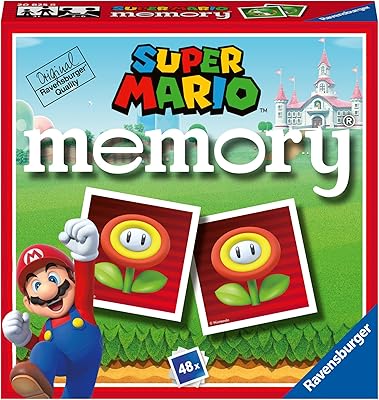
The classic memory-matching game, now with 24 pairs of bright Super Mario artwork. The format is exactly what you expect: lay all 48 cards face down, take turns flipping two at a time, keep pairs you match, most pairs wins. What makes this version worth buying over generic memory games is the licensed art — for a child who loves Mario, these are characters and images they recognize and respond to, which means higher engagement and longer attention span during play.
One thing to note upfront: the packaging is Italian (this is the Ravensburger European edition), which surprises some buyers. The game itself needs no language to play, so it makes no practical difference, but it's worth knowing before the gift wrap comes off. The pocket-sized format is genuinely excellent for travel — this is one of the few games you can pack in a handbag and pull out at a restaurant.
Buy It If
- Your child knows and loves Mario characters
- You want a compact, genuinely travel-friendly game for ages 3–7
Skip It If
- Your child has no connection to Mario — any licensed memory game works on the same mechanics, pick the theme they love

Sequence for Kids introduces the core concept of the adult Sequence game at a preschool level: match your card to an animal on the board, place a chip, try to get four in a row. It adds wild Unicorn cards (place anywhere) and Dragon cards (remove an opponent's chip), which inject just enough chaos and excitement to keep young players engaged without overwhelming them with complexity.
At under $15 for a game with genuine pattern-recognition and very basic strategic thinking built in, this is one of the strongest value picks in the preschool category. The animal theme is universally appealing, and the game scales from playing purely for fun at 3 to beginning to understand strategy and blocking by age 5 or 6. Some buyers note the cards feel thin — worth being aware of if you plan heavy use.
Buy It If
- You want a preschool game with a tiny bit of strategic thinking built in, not pure luck
- Budget is a priority — this delivers strong play value under $15
Skip It If
- Your child is under 3 — the card-matching concept requires some basic animal recognition

A search-and-find game played with cards rather than a giant board. Each round, a scene card goes down and players race to spot the matching hidden object. The Disney artwork keeps young children engaged, and the card-only format makes it one of the most genuinely portable games on this list — the box is under 6 inches and weighs almost nothing.
This is frequently praised as autism-friendly and suitable for sensory-sensitive children, and the observation-only format means zero language barrier or reading requirement. It works surprisingly well as a restaurant game or long-car-ride solution specifically because it requires no flat surface to set up on. Some reviewers have noted it works better as a calm group activity than a competitive game, which suits its audience perfectly.
Buy It If
- You want the most packable, restaurant-friendly game for ages 3–7
- Disney characters are a draw — the art is rich and recognizable
Skip It If
- Your child needs competitive structure with a clear winner to stay engaged
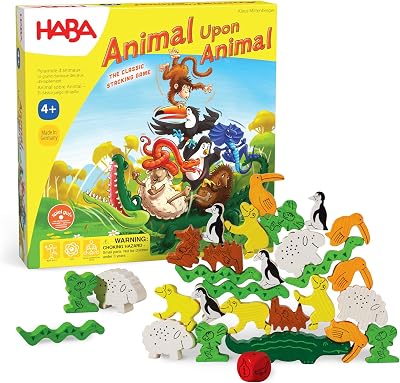
The benchmark dexterity stacking game for young children. Chunky wooden animals — a crocodile base, plus hedgehogs, monkeys, toucans, sheep, snakes, and more — stack on top of each other in increasingly precarious arrangements. A die roll tells you where to place: on the crocodile, on the existing stack, or hand two animals to an opponent. When the pile falls, the player who knocked it collects the spilled pieces as a penalty.
The key advantage of HABA's design specifically is that the die mechanic genuinely levels the playing field between a 4-year-old and an adult. A bad die roll can force any player into an impossible placement. Kids win regularly, which matters enormously for keeping a young child engaged and willing to play again. The wooden pieces are notably durable — this is a game that survives years of enthusiastic play.
Buy It If
- You want a dexterity game where young kids can genuinely beat adults
- Durable wooden components matter — this is built to last
Skip It If
- Your child gets very frustrated when things fall — the whole game is about things falling
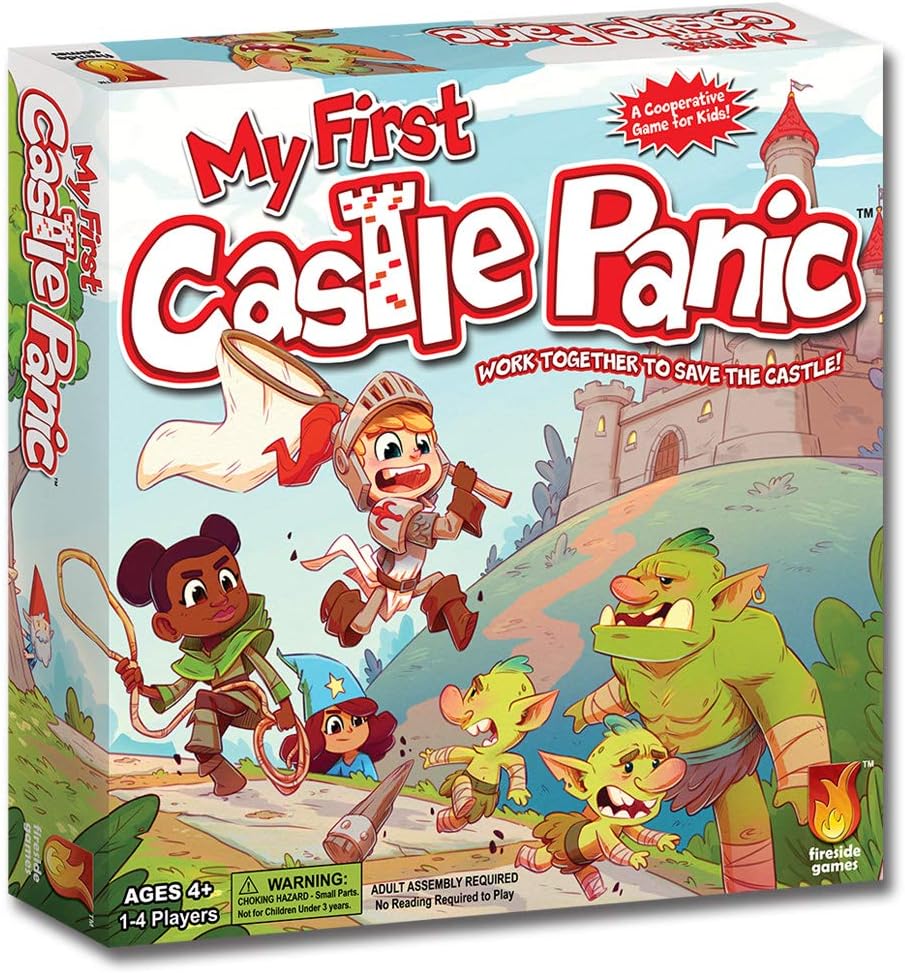
The best cooperative game in the preschool category. My First Castle Panic puts all players on the same side, defending a cardboard castle from silly monster invaders using icon-matched cards. There is no reading required — everything communicates through pictures and colors. Everyone wins together or loses together, which eliminates the sore-loser problem entirely and makes it ideal for mixed-age groups where a 4-year-old and a 7-year-old are playing at the same table.
The castle physically stands upright during play, which gives the game a spatial presence young children respond to. Watching monsters attack a real-looking (if simple) castle is meaningfully more engaging than moving tokens on a flat board. For parents who want to introduce cooperative thinking before competitive play, this is the right starting point.
Buy It If
- You want a genuinely cooperative game where a 4-year-old can participate without reading
- Mixed-age siblings often play together — no one gets targeted or loses individually
Skip It If
- Your child specifically wants to compete and win against others — cooperative play won't satisfy that

Rhino Hero is card-stacking with a narrative hook: you're building a tower of wall cards and floor cards for a rhinoceros superhero to climb. Each floor card played specifies how the next wall cards must be folded, creating an increasingly unstable structure. A wooden rhino figure moves up the tower with each floor added, and special action cards force extra placements or reverse turn order.
At under $15 this is exceptional value for the quality of the experience. The card-folding mechanic introduces a manual-dexterity challenge that is distinct from Animal Upon Animal's stacking, and the two games sit naturally side by side in a preschool collection without feeling redundant. The foundation card has an easy and hard side, extending the challenge range from age 5 through adult.
Buy It If
- You already have Animal Upon Animal and want a second, different dexterity game
- Budget is a consideration — strong experience under $15
Skip It If
- You're choosing between this and Animal Upon Animal as your first dexterity game — Animal Upon Animal has broader age appeal (starts younger)

A Kerplunk-style dexterity game scaled for preschoolers: plastic noodles are laid across a bowl, a Yeti figure balances on top, and players take turns removing noodles one at a time without letting the Yeti fall in. Simple, tactile, and genuinely suspenseful for a 4-year-old. The setup is near-instant and the game plays in under 10 minutes, making it practical for short attention spans.
This sits alongside Rhino Hero and Animal Upon Animal as the three core dexterity games in this guide, but Yeti in My Spaghetti is the most purely tactile and least dependent on hand steadiness — the noodles and bowl format makes it accessible to younger children who find card-stacking too delicate. A strong choice under $15 for the 3–6 age range specifically.
Buy It If
- You want a simple, tactile dexterity game for ages 3–6 with near-instant setup
Skip It If
- Your child is 7+ and wants more strategic depth — this will feel too simple quickly
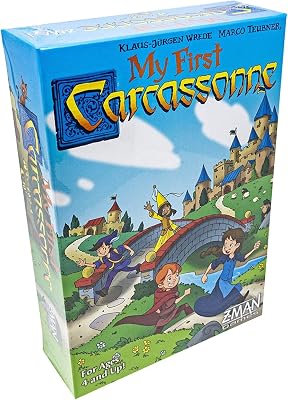
A children's adaptation of Carcassonne that strips the game down to its most accessible core: draw a tile, place it to extend the village, and place a meeple on a completed road with your color child. First player to place all their meeples wins. There are no farmers, no points to count mid-game, no complex scoring — just tile placement and a race to complete your roads.
This is the most intellectually substantive game in the ages 3–5 section, and the most useful as a gateway to the adult Carcassonne game. A child who plays and enjoys this is ready to try the adult version by age 6 or 7. At $42 it is the most expensive pick in this age bracket, but the component quality and the pedagogical value as a genuine board game foundation make it worth the price for families who take board gaming seriously.
Buy It If
- You're a board game family who wants to introduce tile-placement strategy at age 4
- This will naturally lead into the adult Carcassonne game in a year or two
Skip It If
- Budget is tight — Candy Land or Sequence for Kids deliver fun at a fraction of the price for this age group

Winner of the Kinderspiel des Jahres (Germany's children's game of the year), Dragomino is a simplified version of Kingdomino built around dragon egg reveals rather than kingdom scoring. Players draft and place terrain tiles, and when two matching terrain types connect, they flip an egg token to see if a baby dragon hatches. Most dragons at the end wins.
The egg reveal mechanic is genuinely delightful — young children get excited about flipping the tokens regardless of outcome, which keeps energy high through the full game. At $20 for a Kinderspiel winner with quality production, this is one of the strongest value picks for age 5. The draft mechanic introduces a very gentle form of planning ahead that is appropriate for the age without being frustrating.
Buy It If
- Your child is 5–7 and ready for slightly more structure than Candy Land but isn't ready for full Carcassonne
- Dragon themes are a draw — the egg reveal mechanic lands especially well for young kids who love fantasy
Skip It If
- Your child is 8+ — the full Kingdomino or Carcassonne will engage them more

Outfoxed! is the best cooperative deduction game for young children on the market. Players work together to catch a thief before the fox escapes, using an Evidence Decoder device to eliminate suspect cards by revealing their accessories (hat, bag, bow tie). Every decision is made as a team, and the decoder gives the game a genuinely satisfying hands-on feel that purely abstract deduction games lack.
The age range printed on the box is 5–8, but realistically a confident 4-year-old can participate with an adult facilitating, and the game stays interesting well into the early teens because it's timed and genuinely winnable or loseable each session. For a family game that works across a 4–12 age range simultaneously, Outfoxed! is one of the strongest picks in this entire guide.
Buy It If
- You want one cooperative game that spans a wide mixed-age range (4–12)
- The deduction mechanic is a good introduction to logical elimination thinking for young children
Skip It If
- Your child is 10+ and already enjoys more complex deduction games — Suspects or Hanabi will challenge them more
🎮 Best Board Games for Ages 6–8

Every pair of cards in Spot It! shares exactly one matching symbol, and players race to find it. The mathematical guarantee that one match always exists (a feat of combinatorial design) means the game never stalls — there's always something to find, always a winner for each round, always another round to play. Five different mini-games come in the single tin, ranging from speed races to elimination modes that keep the format fresh across many sessions.
At $6.79 in a sturdy travel tin, this is the strongest value-to-entertainment ratio of any game in this guide. It fits in a jacket pocket, plays in 10 minutes, works with 2–8 players, and genuinely spans ages 6 to adult. If you only buy one travel-friendly game for a child in this age range, this is it.
Buy It If
- You want maximum portability and value — nothing else in this guide beats it at under $7
- You need a game that works from ages 6 to adult with no setup
Skip It If
- Your child has slow visual processing or finds the speed element stressful — it is genuinely fast-paced

Connect 4 is one of the most studied abstract games in existence — it is mathematically solved (the first player wins with perfect play), which means the ceiling on genuine strategic depth is limited. But for a 6–10 year old learning to think two or three moves ahead, it provides exactly the right amount of pattern-recognition challenge: accessible enough to learn in one game, deep enough that improvement is visible over weeks of play.
Three included variants (Classic, Frenzy, Pop-Out) extend the replay life without adding complexity. At under $9 and genuinely travel-compact, this is a natural companion to Spot It! for the 6–8 bracket. The rapid play time (5–15 minutes) means multiple games per sitting, which is how young children learn best.
Buy It If
- You want a head-to-head thinking game for ages 6+ with an extremely low learning curve
Skip It If
- You need 3+ players — this is strictly 2-player

Originally designed by a 7-year-old, Taco vs Burrito is a deceptively strategic card game about building the most valuable meal. Players add ingredients to their taco or burrito, but action cards let you steal, swap, or block — creating a tug-of-war that rewards paying attention to what opponents are building. It plays in 15 minutes, travels in a 7x5" box, and supports up to 4 players with straightforward rules.
The main thing to know: this is more strategic than it first appears. Children who try to play it purely casually will lose consistently to players who think ahead. That's actually a good thing — it gives kids genuine room to improve and feel genuinely smart when they pull off a good block or steal. Five game modes extend replay variety, and the humor of the food theme keeps energy high at the table.
Buy It If
- You want a fast, portable card game with more strategic depth than the silly name suggests
Skip It If
- You have a very young child (under 6) who can't yet follow the action card effects

Players take turns flipping cards face-up onto a central pile while chanting "taco, cat, goat, cheese, pizza" in sequence. When the word said matches the image revealed, everyone slaps the pile — last to slap takes the pile. Special action cards (gorilla, narwhal, groundhog) add physical gestures that everyone must perform before slapping, creating chaotic, hilarious split-second decisions that land equally with 7-year-olds and adults.
At $9.95 in a deck that fits in a jacket pocket, this is the single most practical party card game for families. It requires no table, no flat surface, no scorekeeping. It works at restaurants, in cars, in waiting rooms. The rules explanation takes 60 seconds. It scales from 2 to 8 players. For pure laugh-per-dollar value among the 6–12 age range, nothing in this guide beats it.
Buy It If
- You want the most fun-per-dollar and most portable party game in this guide
- Group sizes vary widely — 2 to 8 players all work
Skip It If
- Your child has slow reflexes or sensory sensitivity to sudden touch-contact games

Designed by an 8-year-old, Sleeping Queens is a whimsical card game about waking sleeping queens using Kings, while blocking opponents with Knights and Sleeping Potions. The clever educational hook: discarding number cards requires you to show that they add up to another card in your hand (e.g., discard 2+4 to get rid of a 6). Children practice basic arithmetic as a natural byproduct of playing, not as a worksheet exercise.
At under $12 and in a genuinely small box, this punches well above its price point. The whimsical art style (Rose Queen, Pancake Queen, Ladybug Queen) appeals broadly, and the light math element makes it easy to justify as a gift for a parent who asks "but is it educational?" The manufacturer says 8+, but families consistently report 5 and 6-year-olds playing with parental support.
Buy It If
- You want a game that genuinely practices basic math without feeling like homework
- Under $12 for a travel-friendly, replay-worthy game is excellent value
Skip It If
- Your child strongly resists anything that feels like schoolwork — the math element is light but visible

This board game version of the wildly popular Exploding Kittens card game adds a pop-up board that flips mid-game and changes the layout for players. The core concept remains: draw cards, avoid the Exploding Kitten, use action cards to defuse, skip, or redirect danger. The board addition introduces a spatial element absent from the original card game, giving it a different enough feel to be worth owning alongside rather than instead of the original.
The chaos is real and intentional — Exploding Kittens is not a strategic game. It is a game about reactions, card luck, and laughing at absurd art. For the 7–12 age range who enjoys unpredictable outcomes and silly humor, it delivers reliably. Mixed reviews exist about rulebook clarity on the board mechanics, worth being aware of for the first session.
Buy It If
- Your child loves chaotic, unpredictable party games with zero-pressure outcomes
Skip It If
- You already own the Exploding Kittens card game and want genuine strategic depth — this adds variety, not complexity
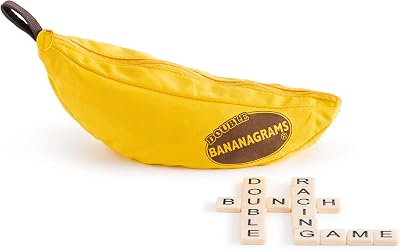
Bananagrams is Scrabble without the board: all players simultaneously build their own crossword from a shared pool of letter tiles, racing to use all their letters first. Double Bananagrams contains 288 tiles (double the original), supporting up to 16 players simultaneously — making it genuinely usable in classroom settings alongside family game nights. There are no turns, no waiting, just constant active play.
The simultaneous play format is the key differentiator from Scrabble: no one sits idle watching another player deliberate. Every player is working at full pace for the entire game. For vocabulary building in a format that doesn't feel like a lesson, Bananagrams is the most effective game in this guide. It works from strong readers at age 7 all the way through adult without any adjustment.
Buy It If
- You want word/vocabulary practice in a genuinely fun simultaneous format
- Large groups (classroom, party, family reunion) — 16 players is genuinely supported
Skip It If
- Your child is not yet a confident reader — spelling under time pressure will be frustrating

Zombie Kidz Evolution is a legacy cooperative game that grows more complex over time through 13 sealed envelopes. The base game is very simple — cooperatively defend your school from zombie invaders. But as players complete missions and open envelopes, new rules, powers, and characters unlock, creating a campaign experience across 35+ short sessions that feel distinctly different by the end from how they started.
The legacy format is the compelling hook: children actively look forward to the next session because there's always a new envelope to potentially unlock. The short session time (5–15 minutes per game) makes it practical for weeknight play. Mensa Select and Dice Tower Seal winner. For a child aged 7–11 who wants an ongoing narrative game rather than a self-contained session, this is the right pick in this guide.
Buy It If
- Your child responds to ongoing progression and "unlocking" — the envelope mechanic creates genuine anticipation
- Short sessions (5–15 min) fit weeknight schedules better than longer games
Skip It If
- Your child prefers self-contained games with no carry-over between sessions

The gold standard gateway strategy game for children entering the 7–12 range. Players draw and place landscape tiles to build a medieval landscape of cities, roads, fields, and monasteries, then place wooden meeple figures to claim and score features. The rules are simple to learn in one session, but the strategic depth — when to place meeples, when to steal a partially-built city, when to sacrifice a meeple for a larger payoff — takes years to genuinely master.
This edition includes the River expansion (creates a more interesting starting layout) and the Abbot (gardens and monasteries scoring), adding meaningful variety without complicating the base game. For a child who has enjoyed Candy Land or Sequence for Kids and is ready for real strategic thinking, Carcassonne is the single most reliable next step in a board game journey.
Buy It If
- You want a proper gateway strategy game for ages 7–10 — this is the benchmark
- It stays interesting for adults, making it genuinely a family game rather than something parents endure
Skip It If
- You're considering the Big Box — the Big Box is only worth it if you already know you love the base game
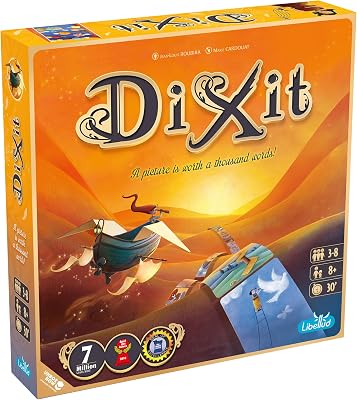
Dixit is a storytelling game built around 84 cards of strikingly beautiful, dreamlike illustrations. Each round, the active player picks a card from their hand and gives a clue — a word, phrase, sound, gesture, anything — that describes it without making it too obvious. Other players choose cards from their own hands that could match the clue, and everyone votes on which card was the original. The scoring rewards clues that some players get but not all.
This is the best game in the guide for children who respond to creativity, imagination, and language. The art cards are genuinely remarkable and provoke genuinely creative responses from children who engage with them. For a child who loves storytelling, drawing, or imaginative play, Dixit delivers a kind of play experience nothing else in this guide replicates.
Buy It If
- Your child is creative and verbal — the imaginative clue-giving is genuinely enjoyable for this type
- Group size is 4–6 players, which is where Dixit shines
Skip It If
- Your group is below 3 players — Dixit needs at least 3 to function, and is significantly better with 5+

A game about communicating color with words. One player draws a card with a specific color swatch on it and must describe it with a single word, then two words, while other players place pawns on a 10x10 board of 480 color squares trying to get as close as possible. Points go to how close guessers land and how accurately the clue-giver described their color.
Hues and Cues works remarkably well across age gaps because color perception and creative language are skills that don't scale strictly with age — a 9-year-old's intuitive description of "salmon" might land better than an adult's overthought one. For large groups (the game supports up to 10 players), it is one of the most inclusive party games in this guide. Requires an indoor flat surface for the board.
Buy It If
- You have large groups (5–10 players) and want a creative party game that spans wide age ranges
Skip It If
- Your group is under 4 players — the game is significantly weaker with fewer people

The Harry Potter version of Clue replaces the classic murder mystery with a Hogwarts-set "who stole a magical item" investigation, with rotating wheels that change the board layout and Dark Mark event cards that add narrative chaos mid-game. For a child who is a Harry Potter fan, the licensed setting transforms a familiar game structure into something that feels specifically chosen rather than generic.
This is more complex than classic Clue — the rotating board mechanic and Dark Mark events add meaningful variables that standard Clue lacks. The learning curve is moderate for an 8-year-old on their first game. Worth being honest: if your child has no connection to Harry Potter, the classic Clue board game is a better buy. The premium here is entirely the theming.
Buy It If
- Your child is a Harry Potter fan — the themed setting makes this a genuinely exciting gift
Skip It If
- Your child doesn't know Harry Potter — buy classic Clue instead and save money

A streamlined version of the renowned 7 Wonders designed as a gateway game. Players draft cards to gather resources and build one of the seven ancient wonders in puzzle-piece segments, while also collecting military, science, and civilian victory points. A game plays in about 25 minutes for any player count — one of the fastest-playing civilization games available.
The key design decision worth knowing: Architects removes the simultaneous play of the original in favor of a simpler sequential draft, making it genuinely learnable in one session rather than requiring multiple playthroughs to grasp. For a child aged 8–12 interested in history or building themes, this offers real strategic depth without the 90-minute session the original demands.
Buy It If
- You want a civilization/strategy game that plays in 25 minutes and teaches itself quickly
Skip It If
- Your child is already a board game enthusiast who has played the original 7 Wonders — Architects will feel too simplified
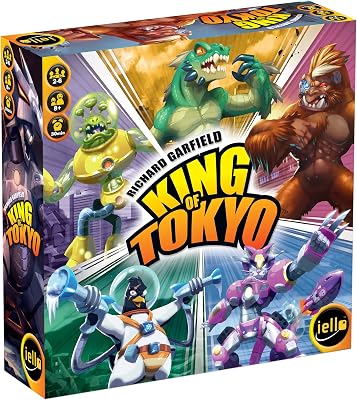
Giant monsters fight for control of Tokyo using custom dice that deal damage, restore health, accumulate energy, and score points. Each round you roll up to three times Yahtzee-style, then decide whether to stay in Tokyo dealing damage to all opponents (risky) or yield it to whoever attacks you. Power cards purchased with energy tokens add ongoing abilities that create unique monster builds each game.
King of Tokyo hits the luck/strategy balance exceptionally well for the 8–12 range: dice rolls keep outcomes uncertain (nobody feels outplayed every time), but the stay-or-yield decision, health management, and Power card selection create genuine strategic texture. The monster theme is universally popular with children. At $43 it's the priciest pick in the 6–8 section, but the replay value from variable Power cards justifies it.
Buy It If
- You want a dice-combat game with monster theming that hits the luck/strategy balance well for ages 8–12
Skip It If
- Player elimination is a problem in your group — eliminated players can sit out for several minutes before the game ends

Trio is a memory-plus-deduction card game with surprising depth for its small footprint. Each player holds cards in hand and can ask other players to reveal their lowest or highest card. The goal is to be the first to collect three cards of the same number. The twist: you can also play from memory of previously revealed cards to make your move without requiring anyone to show new cards, rewarding players who pay close attention over multiple rounds.
The Día de los Muertos artwork is vibrant and distinctive. At $14.99 for a compact box that plays 3–6 players in 10–15 minute rounds, the value is strong. Best with 3+ players — 2-player mode is noted as less satisfying by most buyers. A genuine hidden gem in the guide for families who enjoy card games with a memory component.
Buy It If
- You want a quick, portable memory-deduction card game with more depth than it first appears
Skip It If
- You regularly play with only 2 people — this game is built for 3–6 and weakens significantly with 2

A classic 2-player strategy game of hidden information: both players arrange 40 ranked pieces on a 10x10 board, then move them to capture the opponent's Flag without knowing where it is. Each encounter between pieces reveals ranks — higher rank wins, with the Spy defeating only the Marshal, and Miners defeating Bombs. Memory, bluffing, and tactical positioning are all rewarded.
This Jumbo edition uses pre-printed cylindrical pieces (no stickering needed), stores in sorting trays for fast setup, and uses European-style ranking. Note for US buyers: the European numbering system reverses the rank order compared to classic US Stratego editions, which trips up players who know the original. The strategic ceiling is genuinely high for a game that can be taught in 10 minutes.
Buy It If
- Your child enjoys 2-player strategy with hidden information and bluffing elements
Skip It If
- You need 3+ players — Stratego is strictly 2-player

A card-decoder adventure game that captures the film's jungle-danger theme reasonably well. Players draw Danger cards and must solve them using a card decoder centerpiece before a rhino token advances too far. The decoder mechanism gives the game a satisfying tactile feel that pure card games lack, and the Jumanji theme lands for children who know the movie.
Some buyers note the rulebook has clarity issues on first read, requiring a second pass before the game flows naturally. Worth being prepared for a slightly bumpy first session. Reviewed as more interesting than a standard roll-and-move game but less replayable than the stronger strategy picks in this section. Best suited to Jumanji fans specifically rather than as a general recommendation.
Buy It If
- Your child loves the Jumanji films — the theme is the main draw here
Skip It If
- Your child has no connection to Jumanji — Carcassonne or King of Tokyo offer more replay value at a similar price
♟ Best Board Games for Ages 9–12

A tight 2-player card game of calculated risk. Players commit to expeditions by playing numbered cards in ascending order on colored tracks, but each expedition started subtracts points before it adds them, creating a "go big or stay home" tension with every card. Three rounds of 25–30 minutes each, with scores combining at the end.
Lost Cities rewards careful observation of what your opponent is building and disciplined hand management — both skills that take several games to develop properly. For a parent looking for a thoughtful 2-player game to play against a child aged 10–14, this is an excellent pick. The 6th expedition board included in this edition adds a Wager mechanic that experienced players can layer in for added depth.
Buy It If
- You want a strategic 2-player card game that plays in under 30 minutes per session
Skip It If
- You need 3+ players — Lost Cities is strictly 2-player with no group mode
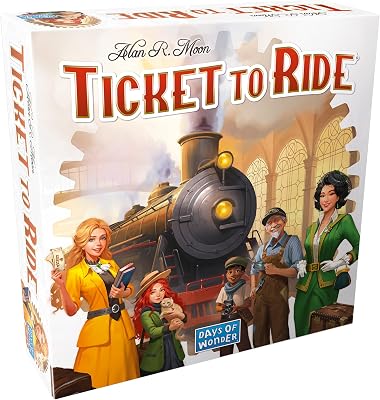
The defining gateway strategy game of the past two decades. Players collect colored train cards and spend them to claim routes between cities on a North American map, working toward secret destination tickets that score bonus points for completing long-haul connections. The rules teach in one session, play time is 30–60 minutes, and the strategic depth — when to claim a route, when to block, how aggressively to pursue long tickets — scales from casual to competitive naturally.
Ticket to Ride also functions as passive geography education: children absorb North American city names and relative locations through repeated play in a way that no worksheet achieves. Multiple expansions (Europe, Asia, various map packs) extend the collection for families who fall in love with the base game. For a child aged 8–14 ready to graduate from pure luck games, this is the most reliable first purchase in the strategy category.
Buy It If
- You want the single most reliable gateway strategy game for ages 8+ — this is the benchmark
- Geography learning as a side effect is a genuine bonus for this age group
Skip It If
- Your family already plays CATAN regularly — start with Carcassonne as a different strategic experience rather than Ticket to Ride
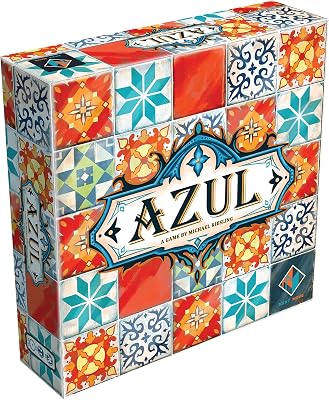
Spiel des Jahres winner (Game of the Year), Azul is a tile-drafting game where players take turns picking colored tiles from factory displays to fill rows on their personal mosaic board, scoring based on completed patterns. The "draft and deny" mechanic — the tiles you take also determine what's left for opponents — gives the game genuine strategic tension beyond simple collection.
The premium resin tiles are one of Azul's most praised features: tactile, heavy, and satisfying in a way cardboard tokens aren't. This is a game children are drawn to before they even understand the rules because the components themselves are beautiful. The penalty mechanic (overflow tiles count against your score) adds a risk-management layer that experienced players leverage and beginners learn from losing. Accessible at age 8 with guidance, deep enough to challenge adults.
Buy It If
- You want an award-winning abstract strategy game with exceptional components that spans 8 to adult
Skip It If
- Your child needs narrative or theme to stay engaged — Azul is purely abstract, no story

CATAN is the most widely played strategy board game in history and the game most often credited with introducing adults and older children to modern board gaming. Players build settlements, cities, and roads on a modular hexagonal island, collecting resources from adjacent terrain and trading with other players to accumulate 10 victory points first. The trading mechanic means negotiation and social dynamics are as important as board position.
The 6th edition updates the component quality and rulebook clarity over previous editions. The modular board creates a different layout every game. Multiple expansions extend the experience for families who want more complexity. At age 10+ for confident players, this is the single most impactful gift in the strategy category — the game that turns a child into a board gamer for life.
Buy It If
- Your child is 10+ and ready for a serious multi-hour strategy game — this is the right starting point
Skip It If
- Your child has never finished a 30-minute game without losing interest — start with Ticket to Ride first
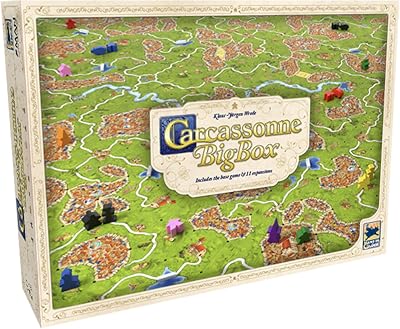
The Big Box contains the base Carcassonne game plus 11 expansions — 192 total tiles covering farmers, traders, dragons, fliers, and more — in one box. For a family that already plays and loves the base game, this is an excellent upgrade that keeps the game fresh for years. The 2025 edition is the most comprehensive version released to date.
The key consideration: do not buy the Big Box as a first introduction to Carcassonne. The expansions add complexity that can overwhelm new players. Buy the base game first, play it 10–15 times, confirm your family genuinely enjoys it, then consider the Big Box as the natural long-term upgrade. As a first purchase, the base game at $30 is the smarter starting point.
Buy It If
- You already own and love Carcassonne and want years more variety from the same game
Skip It If
- You've never played Carcassonne — start with the base game and upgrade later

Hive is chess-depth abstract strategy without a board. Players place and move insect-shaped Bakelite tiles — Queen Bee, Beetle, Ant, Grasshopper, Spider — trying to surround the opponent's Queen Bee while protecting their own. No board means it can be played on any flat surface, and the pieces come in a zip pouch that fits in a bag.
The skill ceiling is genuinely comparable to chess, but the barrier to entry is far lower — rules for each piece fit on a single card, and a first game can begin within five minutes of opening the box. For a child aged 8–14 who enjoys chess or abstract strategy, Hive is the most intellectually substantial 2-player game in this guide. Zero luck involved: every outcome is a direct result of decisions made.
Buy It If
- Your child enjoys chess-style abstract strategy and wants a travel-friendly alternative
Skip It If
- Your child needs luck or narrative to stay engaged — Hive is pure abstract tactics with no theme
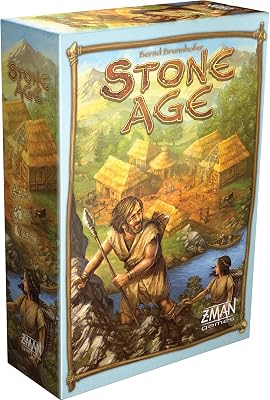
A well-balanced worker placement game where players manage a prehistoric tribe, sending figures to gather food and resources, build huts, advance on a civilization track, and compete for limited board spaces. Dice determine how many resources you gather after placing, creating a satisfying luck buffer that keeps outcomes varied without undermining strategic planning.
Stone Age is frequently recommended as the ideal first worker-placement game — the theme is accessible, the icons are clear, and the multiple paths to victory (building huts, collecting cards, advancing civilization) mean different players can thrive with different approaches. For a child aged 10–14 who has enjoyed CATAN and wants more mechanical depth, Stone Age is the natural next step.
Buy It If
- You want an accessible introduction to worker placement strategy for ages 10+
Skip It If
- Your child hasn't finished CATAN yet — step up gradually rather than skipping ahead

Players arrange plant and pot cards in a 3x4 grid, building adjacency bonuses based on plant types and pot colors to maximize scores. The unique educational element: 50+ real houseplant species appear in the game with accurate care information on each card, meaning children absorb genuine botany knowledge through play. Beth Sobel's artwork is exceptional.
Verdant sits in a calmer, more contemplative style of game than most strategy titles in this section — it is spatial puzzle-solving rather than competitive confrontation. For a child who enjoys arranging, organizing, or nature themes, this is one of the most distinctive picks in the guide. A strong solo mode also makes it valuable for an only child or adult who wants a quality single-player experience.
Buy It If
- Your child loves plants, nature, or cozy spatial puzzle games
- Solo play is a requirement — the solo mode is praised as excellent
Skip It If
- Your child wants high-conflict competitive play — Verdant is low-confrontation and calm
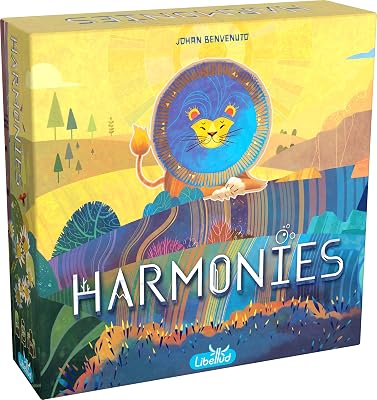
Harmonies is a tile-placement game with 3D wooden landscape tokens — mountains, water, fields, forests — arranged on a personal player board to build ecosystems that attract animal cards worth points. The premium wooden components and the calm, nature-aesthetic design set it apart visually from most strategy games in this price range.
The scoring depends on both the arrangement of landscape tokens and which animal cards you attract, creating genuine planning tension. A solo mode and an expert mode extend the life of the game for experienced players. At $30 for the component quality included, this is strong value for a nature-themed spatial strategy game for ages 10+.
Buy It If
- You want a calming, nature-themed tile-placement game with premium components
Skip It If
- You want high player interaction — Harmonies is a parallel puzzle with minimal direct conflict

A narrative cooperative detective game for 1–6 players built around three fully written mystery cases. Players sort through approximately 148 clue cards per case, making deductions about suspects, alibis, and motives, then open a solution envelope to see how close they got. The 1960s setting and "investigative reporters" framing are distinctive and genuinely charming.
This requires real reading engagement and sustained deduction across an hour-long session — not appropriate for children who lose focus on long tasks. For a child aged 10–14 who genuinely enjoys mystery novels, detective shows, or escape rooms, Suspects provides an analog mystery experience unlike anything else in this guide. Three cases provide roughly 3–6 hours of distinct content before the box is exhausted.
Buy It If
- Your child loves mystery and detective fiction and has the reading stamina for a 60-minute session
Skip It If
- Your child has a short attention span or dislikes reading — this game requires sustained focus on written clues

A sophisticated roll-and-write game with a farming theme inspired by the Indigenous agricultural technique of planting corn, beans, and squash together. Players manage a seasonal farm across 8 rounds using dice placement, compost tokens, and a rondel action system, with a 12-chapter Petalhaven campaign mode that adds narrative progression across multiple sessions.
The Compost mechanic — saving dice results for future use — and the rondel planning system create genuine long-term strategic thinking that sets Three Sisters apart from lighter roll-and-write games. At 12+ this is the most complex pick in the ages 9–12 section, and most accessible to an older child with board game experience rather than a newcomer. The solo mode is highly praised.
Buy It If
- You want a sophisticated roll-and-write game for an older child (12+) with existing strategy game experience
- Solo and campaign modes matter — both are strong
Skip It If
- Your child is new to strategy games — start with Ticket to Ride or CATAN and work up

An at-home escape room experience in a small box at under $18. The Secret Lab scenario locks players in a medical research facility and challenges them to solve a series of interconnected puzzles using a decoder disk, clue cards, and item cards, with a 3-level hint system that lets players nudge themselves without fully spoiling solutions. Designed for 2–3 players in 1–2 hours.
The critical thing to know: Exit games are one-use. You write in the rulebook, cut and fold components, and cannot reset the experience afterward. This is not a flaw — it is what makes the puzzles work — but it changes the value calculus. At $17.62 for a 2-hour experience, it's competitive with movie tickets. Rated difficulty approximately 3.5/5, genuinely challenging for most groups. The Secret Lab is recommended as a starting point for first-time Exit players.
Buy It If
- You want a genuine cooperative puzzle challenge for ages 12+ that plays like a real escape room
- One-time use at $17 is reasonable value compared to other entertainment options
Skip It If
- You want a replayable game — buy a second Exit title after this one instead of expecting to replay it

A team word game where each team has four secret keywords visible only to them through anaglyph (3D-effect) screens. Players give clues to help their team guess a numerical code while trying to intercept the opposing team's clues over multiple rounds. The clever twist: clues build up across rounds, so the opposing team gradually learns what your keywords might be, creating escalating tension as the game progresses.
Decrypto is one of the few games in this guide where the experience genuinely gets better with repeated play — because you can't reuse obvious clues once opponents have decoded them, later rounds force increasingly creative wordplay. For a family or group of 4–8 players aged 12+, this is one of the most replayable party games available. Language skills are genuinely exercised in a pressured, fun context.
Buy It If
- You have 4+ players aged 12+ who enjoy word games and creative communication
Skip It If
- You have fewer than 4 players — teams of at least 2 per side are required for the core mechanic to function
🤝 Best Cooperative Games for Kids
The most accessible cooperative game on this list — no reading, no counting, entirely picture-based. Players work together to find hidden objects in Disney scenes, making it ideal for toddlers and pre-readers. The absence of a "loser" makes it particularly well-suited for very young children or children with emotional regulation challenges. See the full review in the Ages 3–5 section above.
The best cooperative game for preschoolers. Icon-based, no reading required, and the standing cardboard castle gives it a physical presence that makes the "everyone defends together" concept tangible. An ideal first introduction to what cooperation in games actually feels like. Full review in the Ages 3–5 section.
The benchmark cooperative deduction game for the 4–12 range. The Evidence Decoder makes the logic physical and hands-on rather than purely mental, lowering the barrier for young players while keeping the deductive structure engaging for older ones. The best single cooperative purchase in this guide for mixed-age groups. Full review in Ages 3–5 section.
The only cooperative legacy game in this guide, and the only one where the game itself evolves across 35+ sessions as new abilities and rules unlock. For children who thrive on ongoing progression and narrative development, the envelope-unlocking mechanic creates genuine between-session anticipation. Short per-session play time (5–15 min) is practical for school nights. Full review in Ages 6–8 section.

Hanabi won the Spiel des Jahres (Game of the Year) and is one of the most mechanically unique games in this guide. Players hold their cards facing away from themselves — they can see everyone else's hand but not their own. Teammates give limited clues ("you have two red cards" or "your leftmost card is a 3") and the group tries to play firework cards in the correct numerical order without seeing what they're holding.
The cognitive challenge here is genuinely different from anything else on this list: you must track what clues you've received, what they imply about cards you can't see, and what your teammates might be expecting you to do. At $14.24 in a compact box for 2–5 players, the value is exceptional. Best with 4 players, noticeably weaker with 2. Essential for any family that takes cooperative games seriously.
Buy It If
- You want the most mentally distinctive cooperative game in the guide — nothing else plays like Hanabi
- Compact travel format and exceptional value at $14 make this an easy addition to any collection
Skip It If
- Your child is younger than 8 or struggles to hold multiple pieces of information in working memory simultaneously
A narrative cooperative detective game with three fully written mystery cases. Players sort through clue cards together, eliminating suspects and building alibis across a structured hour-long session. For children who enjoy mystery and detective fiction, the written case format delivers a storytelling experience that mechanical games cannot. Full review in Ages 9–12 section.
The best escape-room-in-a-box experience for ages 12+. One-time-use, 1–2 hour session, cooperative puzzle-solving with a 3-level hint system. For families who want a genuinely challenging shared-problem-solving experience — the kind where everyone huddled around a table feels like a team — Exit delivers that better than anything else in this guide. Full review in Ages 9–12 section.
📚 Best Board Games for Learning
The classic memory-matching format is one of the most directly educational game structures available: it builds concentration, working memory, and visual discrimination simultaneously. The Mario theme drives engagement for children who might otherwise resist sitting for a structured activity. Best for ages 3–7. Full review in Ages 3–5 section.
Pattern recognition, logical thinking, and very basic tactical blocking are all built into the Sequence for Kids format without requiring any explicit instruction. For ages 3–7 specifically, this is the most STEM-adjacent game available at the preschool level. Full review in Ages 3–5 section.
The simplest game in this guide that genuinely teaches forward-thinking and pattern recognition under competitive pressure. A child who plays Connect 4 regularly develops the habit of thinking 2–3 moves ahead, which transfers directly to other strategic contexts. Full review in Ages 6–8 section.
Teaches basic addition as a natural game mechanic — discarding cards requires proving their sum equals another card in your hand. Children practice arithmetic without it feeling like homework. One of the most elegantly educational games in this guide. Full review in Ages 6–8 section.
Simultaneous crossword-building under time pressure. Active vocabulary and spelling practice in a format where children are so focused on winning that they don't notice they're doing something educational. Teachers frequently use this in classrooms precisely because of the 1–16 player range. Full review in Ages 6–8 section.
Practices language creativity, metaphor, and perspective-taking — how to describe a feeling or image in a way others might understand, but not too obviously. These are genuinely complex communication skills for children to develop, and Dixit builds them through play that feels nothing like a lesson. Full review in Ages 6–8 section.
Memory of revealed pieces, logical deduction of hidden ones, and bluffing through piece placement — Stratego builds a set of strategic reasoning skills that transfer directly to real-world thinking and chess. The hidden information format teaches children to reason under uncertainty, a genuinely valuable cognitive skill. Full review in Ages 6–8 section.
Passive geography education — children absorb North American city names, relative locations, and connections through repeated play, with no intention of learning it. Strategic planning, route optimization, and resource management are all practiced naturally within the game framework. Full review in Ages 9–12 section.
50+ real houseplant species featured on cards with accurate care information. Children who play Verdant repeatedly absorb genuine botanical knowledge — light and watering needs, plant families, growth habits — without a lesson in sight. One of the most naturally educational games in the 10+ category. Full review in Ages 9–12 section.
Trains working memory, logical inference, and precise communication simultaneously. The constraint of giving only specific types of clues forces children to think carefully about information economy — what is the most useful thing I can tell this person right now? A genuinely rare cognitive exercise in game form. Full review in the Cooperative section.
Creative language under constraint — finding words that hint at your secret keywords without being too obvious or too obscure — is a sophisticated communication skill. Decrypto practices this in a high-pressure, competitive, hilarious context. For ages 12+ specifically, this is one of the strongest language games in the guide. Full review in Ages 9–12 section.

The only purely solo game in this guide. Twelve resin letter dice in a 3-inch tin — roll them all, then arrange the letters into an interlocking crossword grid within a time limit, using every die. No "Q" needed (hence the name). The solo format and extreme portability make it the right pick for an older teen or adult who wants a brain exercise that fits in a pocket.
Note an official store warning about knock-off versions on Amazon — the original Q-Less uses quality resin dice that are noticeably different from counterfeit versions. Buy from a verified seller. At 14+ this is not a children's game in the traditional sense, but for a vocabulary-strong 13–14 year old who enjoys solo word puzzles, it is an excellent gift.
Buy It If
- You want a solo word puzzle that fits in a pocket for an older teen or adult
Skip It If
- You need multiplayer — this is strictly a solo game
👪 Best Family Games (Kids + Adults)
The widest genuine age range of any cooperative game in this guide — a 4-year-old and a 12-year-old can sit at the same table and both meaningfully contribute to the investigation. No one gets left out, no one dominates unfairly. For mixed-age family game nights where you have siblings across a wide span, Outfoxed! is the most reliable pick in this entire guide. Full review in Ages 3–5 section.
The benchmark gateway strategy game for families. Simple enough to learn in one session, strategically deep enough that adults find it genuinely enjoyable rather than endurable. For a family where parents want a game they actually want to play and children want something with visual appeal and real decisions, Carcassonne is the most balanced pick. Full review in Ages 6–8 section.
The most played family strategy game in the world. Accessible enough that an 8-year-old can compete meaningfully, deep enough that adults aren't just going through the motions. The trading-and-blocking dynamics create genuine family drama without arguments over rules. If a family owns one strategy game, Ticket to Ride is the safest choice. Full review in Ages 9–12 section.
Giant monsters, custom dice, and a "do I stay or do I flee?" decision every turn. King of Tokyo hits the luck/strategy balance that makes family game nights work: kids feel like they can win because dice are involved, adults enjoy it because the Power card builds and position play have real teeth. The monster theme lands equally with 8-year-olds and adults who remember Godzilla. Full review in Ages 6–8 section.
The premium resin tiles make Azul the most visually and tactilely appealing game in this guide. Parents who have never been board game enthusiasts consistently enjoy it because it looks beautiful on a table and the mosaic-building concept translates instantly. Children are drawn to it by the tiles before they understand the scoring. For families that might normally skip strategy games, Azul is the most elegant entry point. Full review in Ages 9–12 section.
The family game that started the modern board game renaissance. Trading, negotiating, and the robber mechanic generate genuine family moments — the deals, the betrayals, the unlikely alliances. For a family with children 10+ who wants a game with long-term replay value and the kind of story-worthy sessions that get talked about later, CATAN is the right choice. Full review in Ages 9–12 section.
Dixit works beautifully as a family game because it levels the playing field in a specific way: a child's imaginative, non-literal clue can genuinely outperform an adult's overly clever one. Parents who play Dixit are often surprised to lose to an 8-year-old who gave a perfectly pitched clue intuitively. That dynamic keeps family game nights feeling fair and fun for everyone at the table. Full review in Ages 6–8 section.
A 25-minute civilization game that supports up to 7 players simultaneously — one of the highest player counts in this guide for a proper strategy game. For large family gatherings or holiday game nights where 5–7 people need to play together, Architects is one of the few strategy games that handles that player count well without sessions dragging. Full review in Ages 6–8 section.
Rare among strategy games in that it supports up to 10 players and maintains quality at that count. For large extended-family gatherings where you need everyone around one table, Hues and Cues is one of very few games in this guide that genuinely accommodates it. Color perception doesn't correlate strongly with age, so a 9-year-old at the table is a genuine threat. Full review in Ages 6–8 section.
The 1–16 player range makes Double Bananagrams the most inclusive word game in the guide for large family gatherings. A confident 7-year-old reader can compete with adults because short, clever words beat long ones under time pressure. The simultaneous play format means no waiting around — every player is active for the entire game. Full review in Ages 6–8 section.
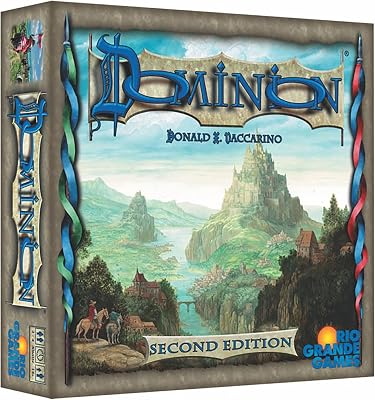
Dominion invented the deck-building genre in 2008 and remains its benchmark. Players start with identical small decks and buy cards from a central market each round, adding them to their deck and building toward ever more efficient combinations. The 500 cards across 26 kingdom card types in this 2nd edition create enormous variety — no two games use the same card set.
As a family game, Dominion sits at the upper end of the accessible range: a confident teenager or a board-game-savvy 12-year-old can engage meaningfully, but a younger child will struggle with the simultaneous decisions required. Session length is surprisingly short for the depth — 20–30 minutes once players know the cards. For a family with older kids who has played through CATAN and Ticket to Ride, Dominion is an excellent next step in the hobby.
Buy It If
- Your family has cleared the gateway games and wants to explore a deeper, faster-playing card strategy game
Skip It If
- You have children under 12 at the table — the card combination reading requires comfort with a lot of text
🧳 Best Travel & Portable Games
These are games you can genuinely take anywhere — restaurants, car trips, planes, hotel rooms. The test: does it fit in a bag without taking up meaningful space, and does it work without a large flat table? Every game here clears both bars.
The travel game by which all others are measured. A sturdy metal tin the size of a drink coaster, 55 cards, five game modes, 2–8 players, zero setup. Pull it out at a restaurant and it runs in the time between ordering and food arriving. Nothing in this guide is more portable or more universally playable. Full review in Ages 6–8 section.
A deck of cards that fits in a jacket pocket, teaches in 60 seconds, and generates genuine excitement in any setting. Works with no table at all — you can play on a bed, on laps, on a floor. For energy and laugh-to-pack-size ratio, this is the strongest pure travel pick under $10. Full review in Ages 6–8 section.
The best travel game specifically for the under-5 crowd. Tiny box, no reading required, works without a flat surface, Disney art that preschoolers love. For toddlers on planes or at restaurants, this is the most practical option in the guide. Full review in Ages 3–5 section.
The pocket-sized Ravensburger format makes this one of the most genuinely packable memory games available. Note: buyers are often surprised by how small it actually is — the cards are 1.97" square. That's a feature for travel, but confirm before gifting if a full-size game is expected. Full review in Ages 3–5 section.
36 oversized numbered cards in a compact box — genuinely pocketable, and the large card format is actually a travel advantage (easier to hold and read in cramped conditions). Fast 10–15 minute rounds make it ideal for in-between moments on trips. Needs 3+ players to shine. Full review in Ages 6–8 section.
60 cards, token tiles, and a cooperative game that plays in 30 minutes — in a box smaller than most paperbacks. Hanabi is the best travel option for a group that wants a genuinely thoughtful game rather than a quick party card game. Works well at a hotel room table or a plane tray table. Full review in the Cooperative section.
A 3-inch tin with 12 dice. The most portable solo activity in this entire guide. For an older teen or adult who travels solo and wants something to do that isn't a screen, Q-Less is genuinely excellent. Fits in any pocket. Full review in the Learning section.
Chess-level strategic depth in a zip pouch. The Bakelite tiles are durable enough to survive any bag and heavy enough to stay stable on any surface. Because Hive needs no board, you can play it on a train seat, a hotel bed, or a beach towel. For 2 players who want a serious game on the go, nothing else in this guide comes close. Full review in Ages 9–12 section.
A flat 7×5×2" box that slips into any bag. More strategic than a typical travel party card game — the action cards and food management system create real decisions rather than pure luck. For a group of 2–4 that wants more engagement than Spot It! offers during a longer journey, Taco vs Burrito is the right step up. Full review in Ages 6–8 section.
The banana-shaped zip pouch fits in any bag and the tiles are small enough to play on any flat surface. The only word game in this guide that travels well. For a holiday trip where you want something educational but fun that doesn't require a board, Bananagrams is the natural pick. Full review in Ages 6–8 section.
A flat compact box for 2 players that fits easily in a day bag. For a parent-and-child duo traveling together who want a thoughtful 30-minute game that plays well on any small surface, Lost Cities is the most satisfying 2-player travel option at this age range. Full review in Ages 9–12 section.
A small box that plays 2–5 players in 15–20 minutes. The Queen cards fan out on a table but the footprint is manageable in most travel settings. For a family group who wants an educational game that doesn't feel like one on a car trip, Sleeping Queens is the most underrated pick in this section. Full review in Ages 6–8 section.
🎉 Best Party Games for Kids
The best kids' party game in the guide, full stop. Reflex-based, zero reading during play, 2–8 players, pocket-sized, 60-second rules explanation. The gorilla, narwhal, and groundhog special cards add physical gestures that make everyone look equally ridiculous, leveling the playing field across ages. Full review in Ages 6–8 section.
With 5 game modes in one tin, Spot It! works as a party game across multiple rounds of different formats. The visual-speed mechanic lands well in noisy, energetic party settings because reactions are instantaneous and outcomes are undeniable — there's no argument about who slapped first, you either spotted it or you didn't. Full review in Ages 6–8 section.
The absurd art and chaotic card play are well-suited to a party context where players want unpredictable outcomes and laughs rather than serious competition. The board version adds a pop-up element that makes it more visually impressive than the card-only version for a party setting where presentation matters. Full review in Ages 6–8 section.
The only game in this guide that genuinely improves with up to 10 players. For birthday parties or family gatherings where you have a large group and need something that everyone can play simultaneously, Hues and Cues handles that player count better than any other game here. Full review in Ages 6–8 section.
Dixit at a party with 5–6 players is genuinely one of the most enjoyable game experiences in this guide. The voting mechanic and simultaneous card selection keep everyone engaged even when it isn't their turn, and the art cards generate conversations and laughter that continue after the game ends. Full review in Ages 6–8 section.
Fast rounds, a small footprint, and a deduction mechanic that rewards players who pay attention across multiple turns. Works well at a party as a "while we wait" or a palate cleanser between heavier games. The compact box is easy to bring and the rules explanation is under 2 minutes. Full review in Ages 6–8 section.
For older children and teens, Decrypto is the strongest party game pick in this guide. The team format, escalating tension across rounds, and genuinely hilarious clue-giving create the kind of party game energy that has everyone leaning in. Scales to 8 players comfortably. Full review in Ages 9–12 section.
King of Tokyo works well at parties precisely because the elimination format — while normally a concern — creates audience engagement. Eliminated players cheer for remaining monsters, and the dice-rolling and Power card reveals generate table energy. For an older-kids party where you want something with more bite than a card game, King of Tokyo is the right pick. Full review in Ages 6–8 section.
♞ Also Worth Knowing: Advanced Games for Older & Enthusiast Players (14+)
These are adult-hobbyist games that made this list because they belong to the broader "board games for the family" conversation — but they are not children's games. Most require 14+ and multiple hours of engagement. Read these reviews with a confident teenager, a passionate older child with existing strategy game experience, or an adult who wants the hobby side of the board game world in mind.
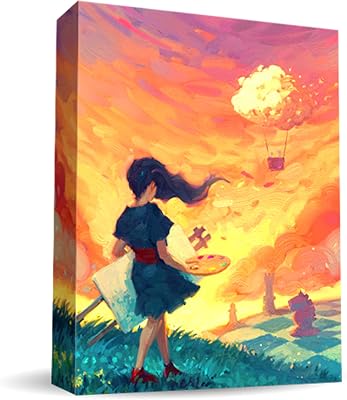
Canvas is a card-layering game where players collect transparent art cards and layer three of them to create paintings, scored by the visible icons they produce. The artwork — fully transparent cards that compose into unique combinations — is the game's defining feature. Every painting is literally unique because the layered result has never existed before in that exact combination.
This is the most visually creative game in the guide and the most accessible of the 14+ picks. A compact box, a 30-minute play time, and a solo mode make Canvas unusually practical for a game at this age rating. For a teenager who is drawn to art, design, or creative play rather than mechanical strategy, Canvas is the right pick from this advanced section. 1–5 players, excellent solo.
Buy It If
- Your teenager loves creative/visual play and you want a beautiful, accessible game with genuine artistic appeal
- Solo play matters — the solo mode is praised as one of the best in the game
Skip It If
- You want heavy mechanical depth — Canvas is accessible and medium-weight, not a strategic heavyweight

Wingspan is one of the most acclaimed board games of the last decade. Players attract birds to their wildlife preserves using a dice-activated engine-building system, with 170+ illustrated bird cards drawn from real species, each featuring actual ornithological information. The production quality — illustrated cards, a birdfeeder dice tower, eggs in multiple colors — is exceptional. Multiple Kennerspiel des Jahres nominations and wins followed its 2019 release.
Be clear-eyed about who this is for: Wingspan is a medium-weight strategy game that takes 60–90 minutes and requires reading a lot of bird card text. A nature-passionate 12-year-old with board game experience can engage with it, but the recommended audience is a confident teenager or adult. The accessible reputation the game has acquired can mislead buyers into thinking it's simpler than it is for a true beginner.
Buy It If
- You want one of the most beautiful, well-designed engine-building games for a teen or adult bird/nature enthusiast
Skip It If
- Your child is under 12 or new to strategy games — despite its gentle theme, this is not a beginner game

A Vienna-set worker placement game where players manage a hotel in the early 20th century — preparing food and drinks, satisfying guests, and advancing on a political influence track for bonus scoring. The dice activation system is the central mechanic: each turn, a pool of dice is rolled and players choose which to take based on their number, then take actions associated with that number. This creates a genuinely dynamic decision space where no two turns feel the same.
Grand Austria Hotel is considered a highlight of the medium-heavy worker placement genre. It rewards planning across multiple turns and punishes reactive play. At 12+ it's accessible to an older teenager with board game experience. For a family that has moved through CATAN, Stone Age, and wants the next level of complexity, this is a natural next step.
Buy It If
- Your family has completed the gateway games and wants a more mechanically complex worker placement game
Skip It If
- You haven't played Stone Age yet — build up to this level rather than starting here

Ark Nova has dominated BoardGameGeek's top-10 rankings since its 2021 release and is widely considered one of the best games published in the last decade. Players build a modern, scientifically oriented zoo using 255 unique animal and action cards, supporting conservation projects and building enclosures in a complex interlocking engine. Sessions run 90–150 minutes for experienced players.
The nature and conservation theme makes this the most intellectually substantive nature game in the guide — it goes far beyond Wingspan in complexity and session length. An outstanding solo mode. For a teenager who is a passionate nature or biology enthusiast and has existing board game experience, Ark Nova is the most ambitious pick in this entire list. Know what you're buying — this is a heavyweight.
Buy It If
- You want the most acclaimed modern strategy game with a nature/conservation theme for a serious teen or adult player
Skip It If
- Your child is new to strategy games or under 14 — this is a serious hobby game, not a gateway game dressed in a pleasant theme

An elegant card-driven Euro game set in Ancient Rome where players expand their trading network across the Mediterranean using a hand of action cards. The defining mechanic: your hand is your action menu, and when you play all your cards you must recall them and start again — creating a satisfying rhythm of planning, executing, and resetting. This bundle includes the base Concordia game plus the Venus expansion and four map boards.
Concordia is frequently cited as one of the best gateway games into the medium-heavy euro category — it's less intimidating to learn than it looks, and the 45–90 minute session time is shorter than most euro games at this complexity level. For a teenager with some strategy game experience who likes historical or trading themes, this is an excellent next-step purchase.
Buy It If
- Your teen likes history, trading, and wants an elegant card-driven Euro that isn't overwhelming to learn
Skip It If
- You haven't played Ticket to Ride and CATAN yet — build the foundation first
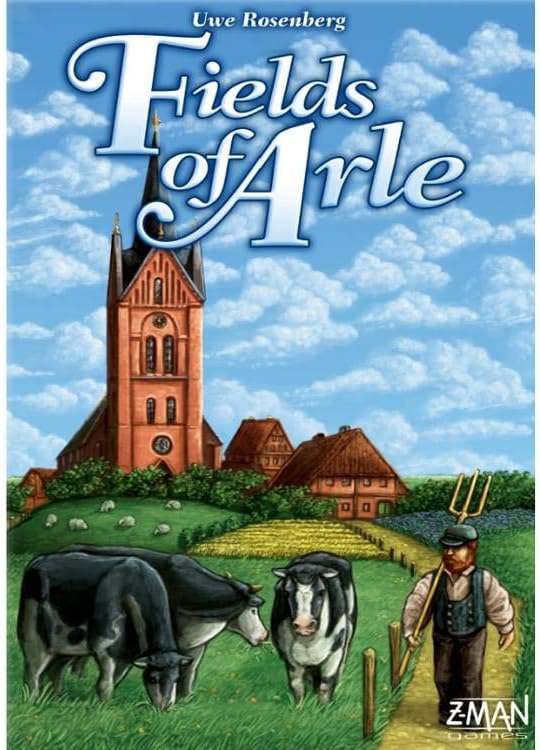
A 1–2 player heavy euro game by Uwe Rosenberg (Agricola, Caverna) set in rural East Frisia. Players develop a farm across multiple seasons — harvesting crops, raising animals, building structures, and expanding land — with a strategic depth that rewards multiple full playthroughs before patterns and optimal paths start to reveal themselves. The solo mode is one of the most highly regarded in the worker placement genre.
Fields of Arle is not for children or casual players. The approximately 120-minute session time, the large table requirement, and the genuinely steep learning curve place it firmly in the hobby gamer category. For a parent who is a board game enthusiast and wants a 1–2 player experience with exceptional replay depth and a farming theme, this is the pick. Do not gift this to a child under 16 unless they specifically requested it by name.
Buy It If
- You are a hobby gamer who wants a deep 1–2 player euro experience with outstanding solo and outstanding replay depth
Skip It If
- Anyone at your table is a board game newcomer — this game does not work as an introduction to the hobby at any level

Stefan Feld's most complex design to date — a 1–4 player civilization game driven by dice activation across a modular board, with 344 wooden markers, 38 custom dice, individual player consoles, and multiple interlocking scoring tracks. Civolution sits at the expert end of the board game complexity spectrum and is genuinely not suitable for casual play or first-time hobby gamers.
The target audience here is a player who has already worked through Ark Nova, Concordia, and Wingspan and wants the next level of challenge. The component quality is exceptional and the replayability from the modular map is very high. At $85 it is the most expensive game in this guide, which makes buying it as a gift for anyone other than an established enthusiast who specifically requested it a risky proposition.
Buy It If
- You are an established euro game enthusiast who has cleared lighter and mid-weight Feld games and wants the hardest challenge in the genre
Skip It If
- Anyone at the table is new to hobby games — this is not a game anyone works up to quickly
Honest Takes
Most Overrated Games for Kids (And What to Buy Instead)
Popular doesn't always mean best. These games are widely purchased, heavily gifted, and frequently underwhelm — not because they're bad, but because expectations rarely match reality. Here's the honest case for each, and a better alternative.
Candy Land (For Children 5+)
Overhyped as a "first strategy game" when it teaches absolutely no strategy at all. The game is 100% luck — no decisions exist. Perfect for a 3-year-old learning turn-taking; actively boring for a 6-year-old who has any concept of winning through skill. Most families buy it for nostalgia reasons and find the child loses interest after three sessions.
Buy instead: Dragomino ($19.99) for ages 5–7 — the dragon egg mechanic delivers the same fun energy with an actual tile-placement decision to make.
Jumanji
The movie is legendary; the game rarely lives up. The card decoder is a satisfying physical piece, but the rulebook receives frequent criticism for clarity issues, and replay value drops sharply after the first few sessions once the novelty wears off. Most purchases are made because of the film connection rather than the quality of the game itself.
Buy instead: King of Tokyo ($42.99) for the same age range with far better replay depth and a theme that generates just as much excitement.
Exploding Kittens (as a "gateway strategy game")
Marketed heavily as a strategy card game but plays almost entirely on luck with a thin layer of card counting. It's fun — the art is great, the chaos is real — but if you're buying this because someone told you it teaches strategic thinking, manage your expectations. It teaches almost nothing except how to handle chaotic, uncontrollable outcomes, which is fine for what it is.
Buy instead: Taco vs Burrito ($19.99) if you want a card game that genuinely rewards strategic thinking in the same age range.
Wingspan (for kids under 12)
The bird theme attracts parents of nature-loving children, and the art is genuinely beautiful. But Wingspan is a medium-weight engine-building game that requires reading 170+ unique bird card effects and tracking multiple resource types. Children under 12 without existing board game experience will be overwhelmed or disengaged within 30 minutes of their first session. The game's accessible reputation was built by adults, not children.
Buy instead: Verdant ($39.99) for a beautiful nature-themed strategy game that genuinely works for ages 10+ without the complexity wall.
Quick Reference
Tier Rankings: All 52 Games
Ranked within their target age range and category — not against each other across all ages. A preschool game in S-tier is the best of its kind for 3-year-olds, not compared to CATAN.
Frequently Asked Questions
Board Game Questions, Answered
For a 5-year-old, the best options depend on whether you want cooperative or competitive play. For cooperative, My First Castle Panic is exceptional — icon-based, no reading required, and the castle-defense theme holds attention well. For a classic first competitive game with more engagement than Candy Land, Dragomino introduces tile placement with dragon egg reveals that most 5-year-olds find genuinely exciting. If travel or portability matters, Eye Found It! is the most practical option at this age.
It depends on the age range of your family. For families with children 6–12, Carcassonne is the most reliable pick — adults find it genuinely engaging, children can learn it in one game, and it plays in under an hour. For families with children 8–14, Ticket to Ride is the most widely proven gateway strategy game for a reason. For creative or storytelling families, Dixit is the pick that levels the playing field most naturally between adults and children.
Neither is universally better — it depends on your child's temperament and your goals. Cooperative games eliminate the sore-loser problem entirely and are dramatically better for mixed-age groups where skill differences are large. Competitive games teach resilience in losing and the ability to handle not being the best, which are genuinely valuable skills. The practical advice: start cooperative for children under 7 or any child who struggles emotionally with losing, and introduce competitive play gradually once the habit of playing games is established. Many of the best family games mix both — Outfoxed! is fully cooperative, while Carcassonne is competitive but low-conflict.
For genuine road-trip practicality, the criteria are strict: the game must fit in a small bag, require no large flat surface, and work without losing pieces when the car moves. By that standard, Taco Cat Goat Cheese Pizza is the strongest pick — it's a deck of cards that works on laps. Spot It! in its tin is the backup. Trio and Hanabi work on a flat surface between seats. For the under-5 crowd specifically, Eye Found It! requires no surface at all.
Connect 4 is arguably the fastest strategy game to teach — the rules fit in one sentence and a first game starts within two minutes of opening the box. For something with more depth that is still very quick to teach, Carcassonne can be explained in 5 minutes and plays itself from there. For the 8–12 range, Azul has a low initial rules overhead that expands naturally as you play rather than all upfront.
Yes, with the right expectations. CATAN is rated 10+ and that's a reasonable floor — a confident 10-year-old with some strategy game experience can play meaningfully. The trading and negotiation elements may favor older, more verbally confident children. The bigger issue is session length: CATAN takes 60–90 minutes, and a child who hasn't built up stamina for longer sessions will start to disengage before the game ends. If your child regularly finishes 45-minute games without issue, CATAN is a great next step. If they're new to strategy games, start with Ticket to Ride first.
The best educational games are ones where the learning is invisible — children practice skills without realizing they're learning. Sleeping Queens builds addition fluency through card mechanics that feel like play. Double Bananagrams builds vocabulary and spelling while players are focused entirely on winning. Ticket to Ride teaches North American geography through route-building. Verdant delivers real botany information through card play. None of these feels educational in the way a worksheet does — which is precisely why they work.
Carcassonne Classic is the base game with 72 land tiles, the River expansion, and the Abbot module — everything a new player needs. Carcassonne Big Box includes the base game plus 11 expansions in one box — Dragons, Traders & Builders, Inns & Cathedrals, and more — for 192 total tiles. The Big Box makes sense only if you already know and love the base game. Buying it cold as a first purchase means overwhelming a new player with options they can't yet evaluate. Start with the base game at $30, play it 10–15 times, then decide whether the Big Box upgrade is worth the investment.
Comments
Post a Comment